Short Course 5 AI across Reservoir Modelling Workflow: a Hands-on Introduction
Room
Friday
12 June 2025
Time
8:30-17:00
CPD Points
5
Instructor
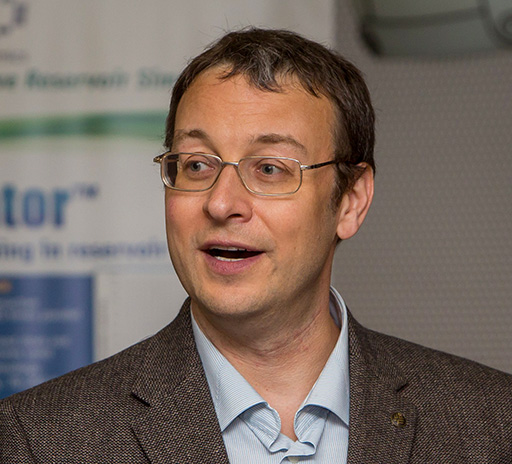
Prof. Vasily Demyanov
Heriot-Watt University
Dr Farah Rabie
Heriot-Watt University

Overview
This program provides practical, hands-on training in Python-based artificial intelligence workflows for reservoir modeling. Designed for professionals already familiar with reservoir data, the course focuses on leveraging modern Python AI tools and domain reservoir knowledge to extract greater insights and value for subsurface applications. Using publicly available reservoir datasets, participants will work through typical reservoir characterization, modeling, and monitoring challenges.
Participants will consolidate the basic conceptual understanding of machine learning principles from an illustrative overview in the reservoir modelling context. Participants will also gain an experiential learning knowledge of AI applications to reservoir modelling workflows across geoscience and engineering tasks. The take-home learning will include examples of AI applications to basic reservoir data: wireline, seismic, and production (PTA).
Learning Outcomes
Participants will develop foundational knowledge of machine learning concepts through reservoir modeling case studies and Python hand-on demonstrations. The experiential learning approach covers AI applications spanning both geoscience and engineering workflows, giving attendees direct practice with these emerging technologies.
Practical Applications
The course includes hands-on examples applying AI to three core reservoir data types:
- Wireline log analysis
- Seismic data interpretation
- Production data including pressure transient analysis (PTA)
These practical exercises ensure participants leave with applicable skills they can implement in their own reservoir workflows.
Course Outline
This course showcases specific AI applications that enhance traditional reservoir modeling approaches with advanced analytics capabilities. Participants work with pre-built Python notebooks designed for real-field reservoir data visualization, modeling, and analysis. The curriculum combines a streamlined introduction to machine learning fundamentals and core algorithms with practical demonstrations across diverse reservoir datasets and applications. Interactive, hands-on Python notebook exercises throughout the course reinforce key AI concepts and coding skills.
Course topics include
- Introduction to learning from data key concepts, good practice and pitfalls.
- Over-learning and model complexity.
- Unsupervised and supervised learning principles and algorithmics.
- Reservoir data visualisation and manipulation with Python.
- Facies identification and classification from wireline data (hands-on).
- Seismic segmentation and object detection with unsupervised learning for seismic interpretation (hands-on).
- Deep learning and generative AI for reservoir applications.
- Pattern recognition for well dynamics performance in Pressure Transient Analysis data (hands-on, optional).
- How Machine Learning can account for domain knowledge in learning from data.
- Physics-based learning (optional).
Participants’ Profile
This course is for anyone who is interested in getting familiar with running machine learning applications and data analytics for subsurface data. Domain knowledge of subsurface data, such as petrophysics, facies, seismic, reservoir engineering and production would be beneficial.
Prerequisites
The course does not imply any prior knowledge of machine learning and will include a basic introduction of algorithms. No prior Python coding experience is required – all template codes will be provided. Basic understanding of scripting language (like Python) would come handy. The participants will be expected to use their own laptops for the course exercises with Python Jupiter notebooks following the instructions provided. Basic understanding of reservoir data: wireline, seismic, well pressure transients would be essential.
| Time | Activity |
|---|---|
| 08:00 | Departure from conference center Messe Wien |
| 09:00 – 09:20 | Safety introduction ITC |
| 09:20 – 10:50 | ITC / TECH Center & Lab |
| 10:50 – 11:00 | Group exchange |
| 11:00 – 12:30 | ITC / TECH Center & Lab |
| 12:30 – 13:30 | Lunch at the ITC event area |
| 14:30 | Arrival back at conference center Messe Wien |