
Workshop 11
Exploring the Limits of Gas Saturation Measurement Using Seismic Data Monday, June 8th | Room 10
Convenors
- Alistair Crosby (BP)
- Rodney Johnston (BP)
- Mark Chapman – (University of Edinburgh)
- Gary Hampson (DUG)
Description
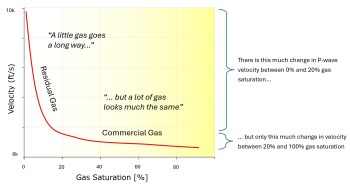
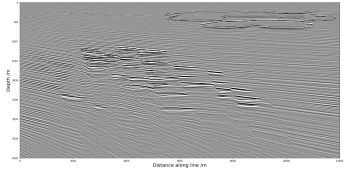
It is well-known that seismic data is frustratingly insensitive to gas saturation (“a little gas goes a long way”), and this limits our ability to distinguish residual from commercial accumulations, particularly in exploration settings where well information is sparse or absent. In this workshop, we will explore the extent to which conventional imaging and modern inversion-based methods (such as multiparameter FWI) can crack this most longstanding of geophysical challenges. A focus will be the findings of a recent “gas saturation acceleration challenge”, in which participants attempted to distinguish between commercial and non-commercial (residual) gas saturations in both field and realistic synthetic datasets – but all novel contributions on the theme will be welcomed.
Sub-Topics that will be covered in the workshop:
- Sensitivity of viscoelastic parameters to gas saturation in different geological settings – theoretical and laboratory view
- Interim results from the recent “gas saturation acceleration challenge” (field and realistic synthetic datasets)
- Other compelling field and synthetic data examples
Participant Profile
Commercial and academic participants in the bp “Gas saturation acceleration challenge” as well as anyone with an interest in how to distinguish between commercial and non-commercial gas accumulations using seismic data.
Workshop Programme
| Time | Activity |
|---|---|
| 09:00 | Introduction: The importance of detecting gas saturation: an operator's perspective - Rodney Johnston (BP) |
| Rock physics | |
| 09:20 | Effect of saturation on downhole DAS travel-times and amplitudes - Boris Guervich (Curtin University) |
| 09:40 | Frequency-dependent elastic properties of Tournemire shale - Sam Chapman (ENS) |
| 10:00 | The elusive link between gas saturation and seismic attenuation Mark Chapman (University of Edinburgh) |
| 10:20 | Discussion |
| 10:35 | Coffee Break |
| Multi-physics | |
| 10:50 | Estimation of CO2 saturation and pressure from multiphysics data - Bastien Dupuy (SINTEF) |
| 11:10 | Try something different: Integrating seismic and electomagnetic data to de-risk gas reservoirs - Lucy Macgregor (Petronas) |
| 11:30 | CO2 Plume Saturation Estimation Using EM When the Geometry is Reconstructed by Seismic - Vahid Entezar-Saadat (MU Newfoundland) |
| 11:50 | Discussion |
| 12:05 | Lunch |
| Field & Modelling Studies | |
| 13:00 | The bp PRG synthetic data challenge, Alistair Crosby (BP) |
| 13:20 | On fluid sensitivity of compressibility and its role in residual gas saturation - Panos Doulgeris (Delft Inversion) |
| 13:40 | Anisotropic AVO and rock physics inversion: partial gas saturation mapping - Raul Cova (Qeye Labs) |
| 14:00 | Increasing interpretation confidence in gas-charged sands with elastic MP-FWI - Monika Hartmann (DUG) |
| 14:20 | Discussion |
| 14:35 | Illuminating the shadows: fifty years of seismic frequency attributes - Vittorio De Tomasi (ENI) |
| 14:55 | Can simultaneous PP and PS inversion support saturation estimate from seismic?, Ali Tura (RCP) |
| 15:15 | DHI as Reservoir Quality Indicators: Implications and Seismic Pitfalls for Commercial Fluid Saturation in Brazilian Pre-Salt Carbonates, Matheus Sobreira (Petrobras) |
| 15:35 | Discussion and wrap-up (to finish before opening ceremony starts at 4pm) |