
Workshop 10
Scale Matters! Multiscale Perspectives on Geohazard and Engineering Constraints across the Renewable Industry Monday, June 8th | Room 9
Convenors
- Adriana Comanescu (Vysus Group)
- Scott Griffiths (Kraken Robotics)
- Silvia Perez (Fugro)
- Bartosz Kurjanski (The University of Aberdeen)
Description
The process of energy transition and the growth of the offshore renewable sector resulted in a change in the meaning and nature of geohazards and geoengineering constraints. Large development areas, but also small design and installation tolerances, mean that the assessment of potential geohazards and/or difficult ground conditions needs to be completed in detail (for example, every boulder >30 cm matters) over vast seabed and subsurface areas often exceeding 500 km2
Moreover, the relevance and nature of geohazards and geoengineering constraints differ between the types of offshore renewable projects:
Fixed and floating wind turbine generators, geohazards, and engineering constraints
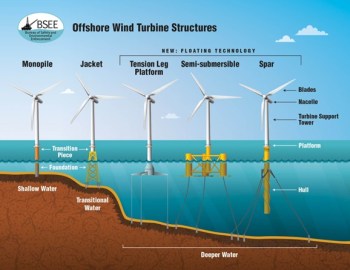
Fixed-bottom turbines, typically installed in shallow waters, face challenges such as seabed instability, scour, sediment mobility, and the presence of boulders or hard strata that complicate pile driving and jacket foundation anchoring. In contrast, floating wind turbines – deployed in deeper water – must contend with dynamic metocean conditions, mooring line integrity, and anchor system reliability. Both systems require detailed geotechnical and geophysical evaluation to assess risks like gas pockets and fault zones that could compromise structural stability, but the depth and area of interest for each is very different.
Cable routes geohazards and engineering constraints
Subsea power cables are vulnerable to a range of geohazards, including sediment transport, scouring, and seismic activity. Engineering constraints arise from the need to balance optimal routing and installation methodology with environmental protection zones, existing marine infrastructure, seabed topography, and near-surface sediment composition. Burial depth, thermal dissipation, and protection against fishing gear or anchor strikes are critical design considerations. Advanced geophysical mapping and risk modeling are essential to mitigate these threats and ensure long-term cable integrity.
Nearshore and landfall geohazards and engineering constraints
The transition zone from offshore to onshore – where cables make landfall – is particularly sensitive. Coastal erosion, tidal fluctuations, and anthropogenic impacts pose significant risks. Engineering solutions must account for dynamic shoreline processes, potential flooding, and the need for horizontal directional drilling (HDD) or trenchless technologies to minimise environmental disruption. Landfall sites often face regulatory and community engagement hurdles, adding layers of complexity to project execution.
Lessons Learned and Future Outlook
Past projects have underscored the importance of early-stage geohazard assessments and adaptive engineering strategies. Lessons include the value of integrated geotechnical and geophysical data, the need for flexible design frameworks, and the benefits of stakeholder collaboration. Looking ahead, innovations in remote sensing, AI tools to improve efficiency and reduce uncertainty, and remote operation techniques promise to enhance resilience and reduce costs. As offshore wind expands into more challenging environments, integrated hazard mitigation and sustainable engineering will be pivotal to its success.
This workshop aims to bring together perspectives from different stakeholders to understand how geohazards and geoengineering constraints are perceived and addressed across the different scales of offshore renewables projects.
Sub-Topics that will be covered in the workshop:
- Fixed and floating wind turbine generators, geohazards, and engineering constraints
- Cable routes geohazards and engineering constraints
- Nearshore and landfall geohazards and engineering constraints
- Lessons learned and future outlook
Participant Profile
Stakeholders who are involved in geohazard assessments and developing ground models.
Workshop Programme
| Time | Activity |
|---|---|
| 09:00 | Workshop Welcome and Introduction - Bartosz Kurjanski |
| Session 1: Fixed and floating wind turbine generators geohazard and engineering constraints | |
| 09:05 | Marine Geoscience Desktop Studies: A Geoscientist’s Approach to Integrated and Strategic Geohazard Thinking - Simona Caruso |
| 09:20 | Anchored in Data: Effective Ground Risk Management for Floating Offshore Wind Projects - Jordan Geear |
| 09:35 | Better seismic, better decisions: reducing uncertainty in offshore site investigations - Peter Cox |
| 09:50 | Implications for floating offshore wind from a geohazards perspective - David Vaughan |
| 10:05 | Q & A |
| 10:25 | Morning break |
| Session 2: Cable routes geohazards and engineering constraints | |
| 10:40 | Regional variability of shallow soil conditions for offshore cable burial in the North Sea - Catriona McDonald |
| 10:55 | Cable routing: optimising geophysical surveys to reduce uncertainty - Susan Rice |
| 11:10 | From Risk to Route: Integrating Geohazard Analysis into Cable Installation - Hannah Smith |
| 11:25 | Q & A |
| 11:40 | Lunch Break |
| Session 3: Nearshore and landfall geohazards and engineering constraints | |
| 12:40 | Integrating Aerial and Ground Based Surveys to Characterise Submarine Cable Landfalls - Chris Brennan |
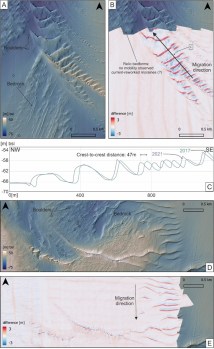
| 12:55 | Seabed Mobility and Its Implications for Submarine Cable Risk Within Export Corridors and Option Areas - Claire McGee |
| 13:10 | Cable Landfalls: Where Offshore Wind Gets Complicated - Leah Arlott |
| 13:25 | Q & A |
| 13:40 | Afternoon break |
| Session 4: Lessons learned and future outlook | |
| 13:55 | The Evolution of Ground Modelling for Offshore Wind: From Current Practice to Future Challenges, Lessons Learned from GIFT JIP - Vanessa Monteleone |
| 14:10 | Lessons learned with regards to marine archeology and landscapes - Andy Emery |
| 14:25 | Installation Constraints from Geohazards - Experienced Based Insights - Toby Powell |
| 14:40 | Q & A |
| 14:55 | Wrap up and open discussion |
| 15:25 | Closing remark |
| 15:30 | Workshop closes |